Portable lantern / fictional concept L01
When the day
winds down.
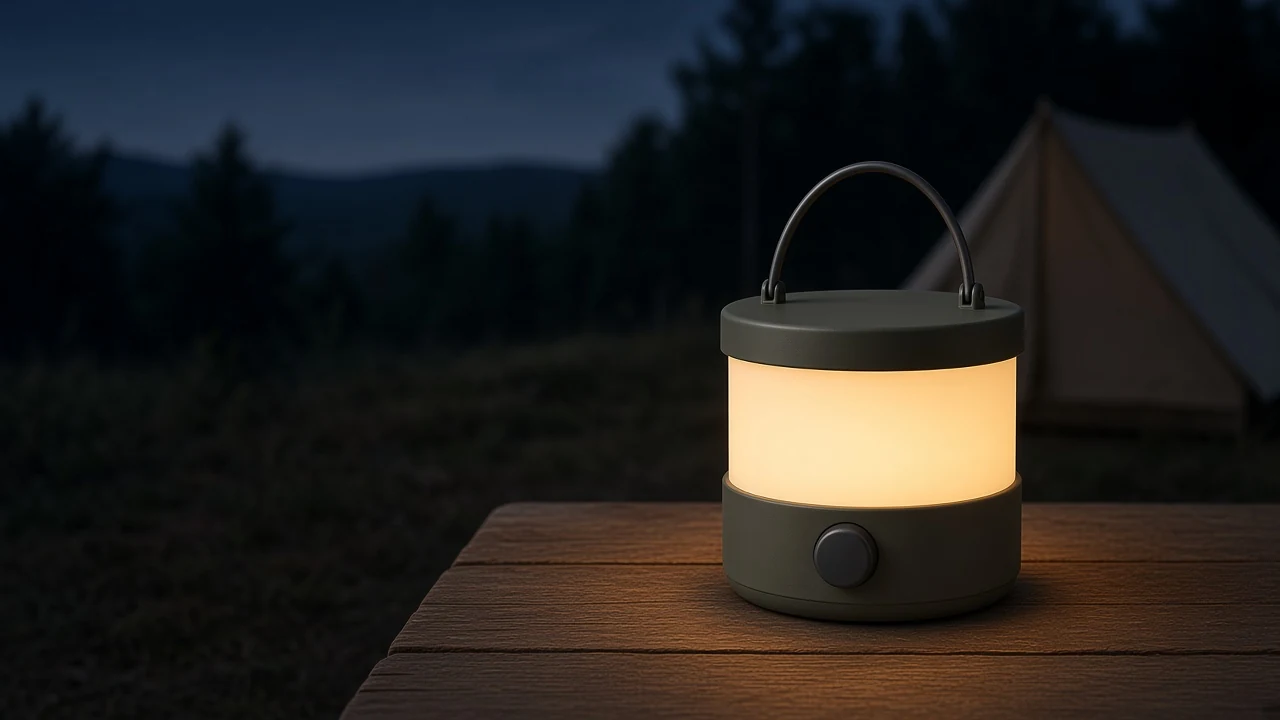
A portable lantern concept, shown in daylight and in a quiet camp setting. No spectacle. Just a closer look at the object.
Look at the detailsImagined campsite / AI-generated image
Illumination is illustrative, not measured output.
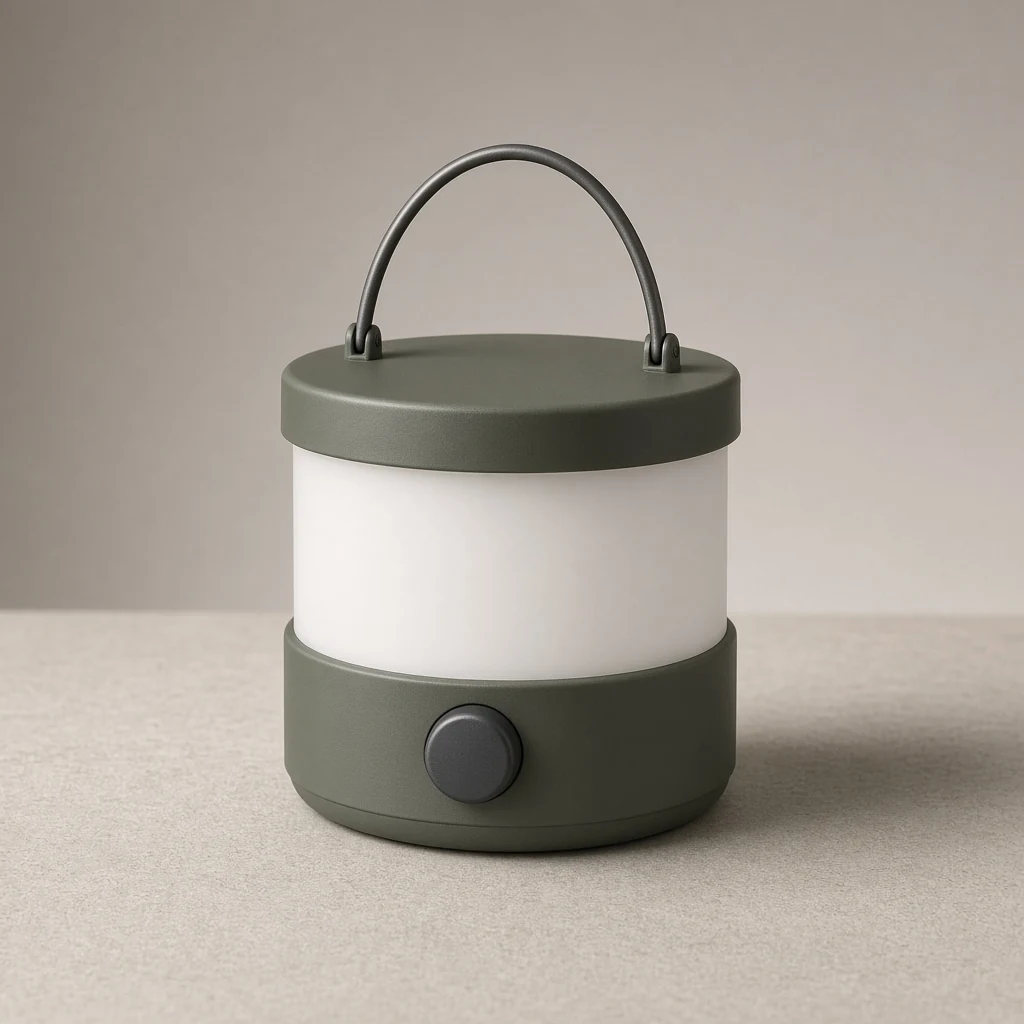
Whole-object view / AI-generated image
The same lantern, shown unlit.
A closer look at L01
A simple lantern,
with its details in view.
An olive housing frames an unbroken diffuser band. A single round control and an upright carrying handle keep the visible form uncomplicated.
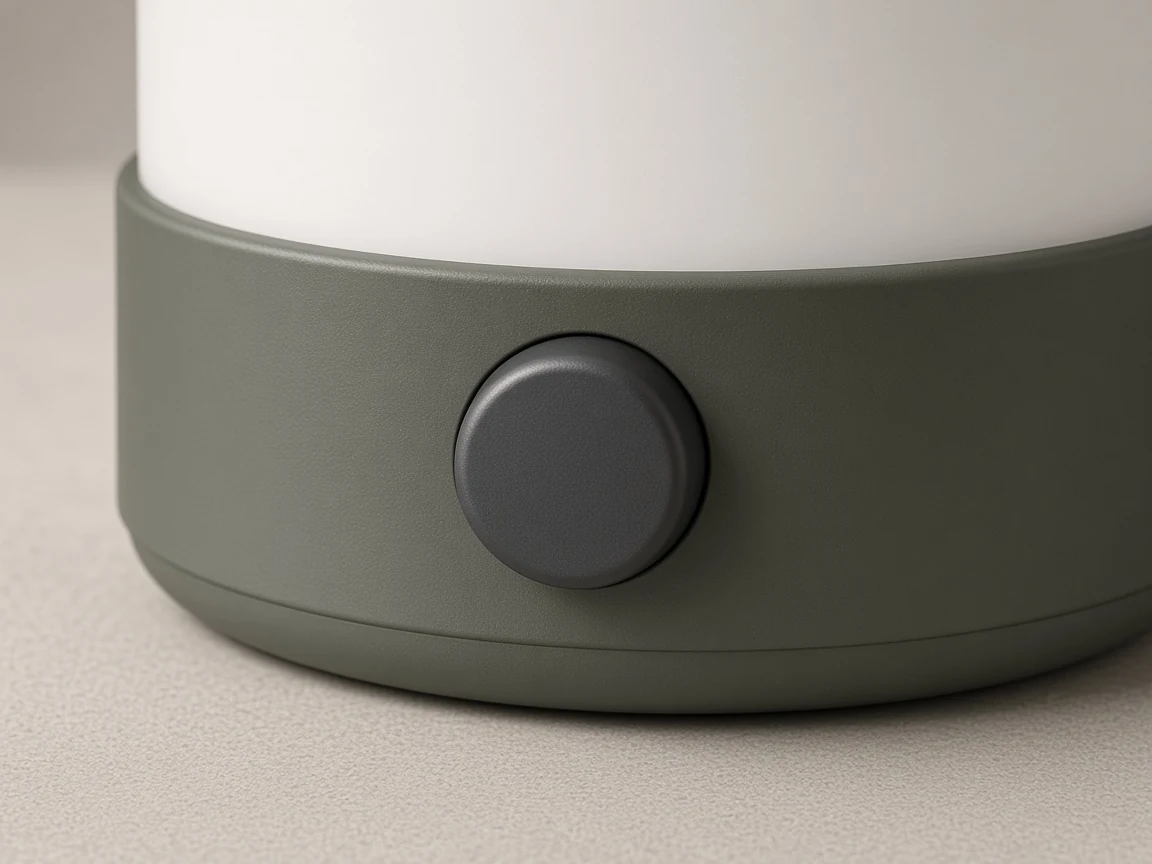
One visible control.
The concept shows a plain rotary-style control. Its electrical function, operating modes and light adjustment are not specified by this image.
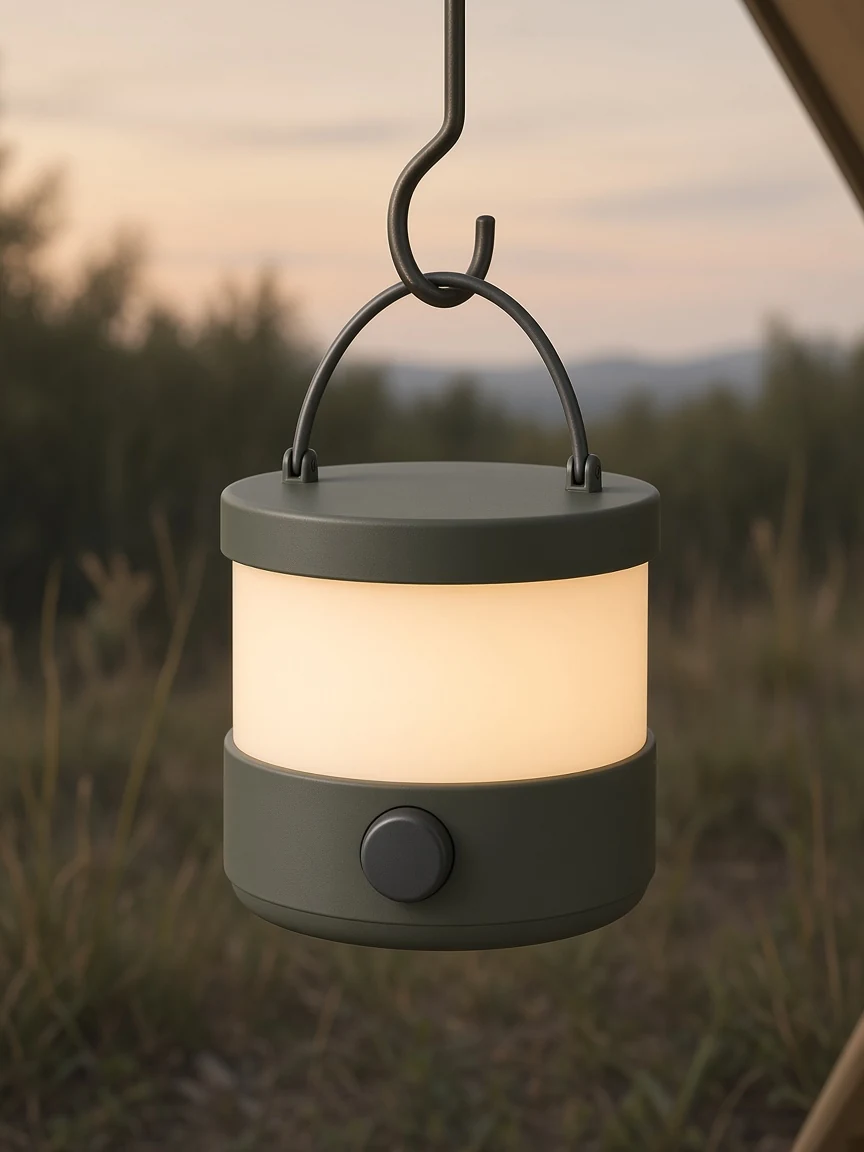
Carrying, pictured.
The same handle becomes the focus of an imagined hanging scene. This visual does not establish a load rating, hanging approval or installation method.
Put the requirements
on the table.
For a real lantern project, define the use context and the checks that matter before choosing an appearance or discussing supply.
Useful details to include
Use context and lighting needs
- The intended setting, positioning and handling requirements.
- Light-output, distribution and adjustment requirements to specify and verify.
- Any portability, hanging or user-access needs to review in the actual design.
Power, environment and compliance
- Power source, charging approach and runtime targets, if required.
- Environmental exposure and the applicable protection or safety tests.
- Destination markets, electrical documentation and transport requirements to confirm.
Form, finish and supply
- Drawings or references, size and weight targets, finish and colour direction.
- Packaging, labelling and sample-review expectations.
- Indicative quantities, project stage and timing for an actual supplier discussion.
This is a presentation concept, not a supplier listing. Materials, performance, safety, pricing and delivery require confirmation against a real product and agreed brief.